
  Written by: Morag Phillips and Martin Hopkins
What does fair pay really mean? I imagine that if you asked a group what “fair pay” means, you’ll have a collection of views. If you then asked a group what “fair parenting” means, you’ll have another collection of views. The concept of fairness seems to rest partly in our own experience of the matter under consideration, and it seems that it is very tainted by our own comparison of the application in our immediate context. To step out of pay for a while into the parenting world, a sibling that was allowed to have a smartphone at age 15 may deem it unfair when a much younger sibling received their smartphone at age 12. The sense of outrage that comes with an experience of unfairness makes it a burning issue. It burns brightly when it’s happening to us! Fairness itself does not inherently have a bias. The concept of fairness revolves around treating all individuals or groups impartially and without favouritism or discrimination. It aims to ensure that decisions, processes, or outcomes are reasonable, justifiable, and consistent. Fairness typically refers to the quality of being reasonable and impartial. It involves ensuring that decisions or actions are consistent, unbiased, and considerate of all relevant factors. Fairness often focuses on the process or procedure by which decisions are made rather than the outcomes themselves. For example, in a decision-making context, fairness might mean giving everyone an equal opportunity to voice their opinions or ensuring that rules are applied consistently to all individuals. So is it fair that both siblings got a Smartphone? Does the timing make it different? Managing pay practices with a focus on fairness, justice, equity, and equality involves understanding each concept distinctly and designing a pay structure that balances these principles. Here’s a breakdown of each concept and how they relate to pay management:
Let’s add 2 more important concepts…
We could ask which factor should be considered the most important. It is indeed possible that pursuit of one element may mean we don’t achieve the other. In this example, we could say there is fairness, but not justice: Imagine a scenario where a company needs to downsize due to financial difficulties. The company decides to retrench employees based solely on tenure, meaning those who have been with the company the shortest amount of time is let go first. This decision might be considered fair because it applies the same criteria (tenure) to all employees without discrimination. However, it may not be just if some employees who are newer have made significant contributions or have higher performance ratings compared to longer-tenured employees who are retained. In this case, fairness in terms of consistent application of criteria (tenure) is maintained, but justice may be lacking because deserving employees are being retrenched based on a criterion that does not necessarily reflect their value or contributions to the organisation. This demonstrates that fairness and justice are distinct concepts that can sometimes conflict with each other depending on the context and the specific criteria or principles being applied. Achieving both fairness and justice often requires careful consideration of both the processes used to arrive at decisions and the outcomes that result from those decisions, taking into account relevant ethical, moral, and contextual factors. To design a pay structure that integrates fairness, justice, equity, and equality, managers can consider the following strategies and practical tools:
In summary, while fairness focuses on the fairness of procedures and decision-making, equity assesses whether those procedures result in fair and just outcomes. Together, fairness and equity aim to promote a more just and equitable society or organisation where everyone has equal opportunities and access to resources based on their circumstances and contributions. As we close, a challenge to our industry is to see the determination of an organisation-specific living wage as a decision sparked by justice, supported by fair policy, and resulting in an equitable outcome. Morag Phillips is a Master Reward Specialist, a SARA Executive Committee member, Chair of the SARA Thought Leadership Committee, and a member of the SARA Conference and Reward Awards Committee. Martin Hopkins is a Master Reward Specialist, and a member of the SARA Thought Leadership Committee, and Head of Reward Advisory Services at Bowmans Law. ENDS MEDIA CONTACT: Idele Prinsloo, [email protected], 082 573 9219, www.atthatpoint.co.za For more information on SARA please visit: Website: www.sara.co.za Twitter: @SA_reward LinkedIn: South African Reward Association Facebook: SARA – South African Reward Association
0 Comments
 The launch of ChatGPT late in 2022, and the tremendous interest it provoked, inaugurated what one will one day see as the Age of Artificial Intelligence (AI). AI will make it easier to generate outputs in virtually every industry, creating a challenge for reward professionals: how does one measure an individual’s performance when one of his or her outputs can be generated by an algorithm?
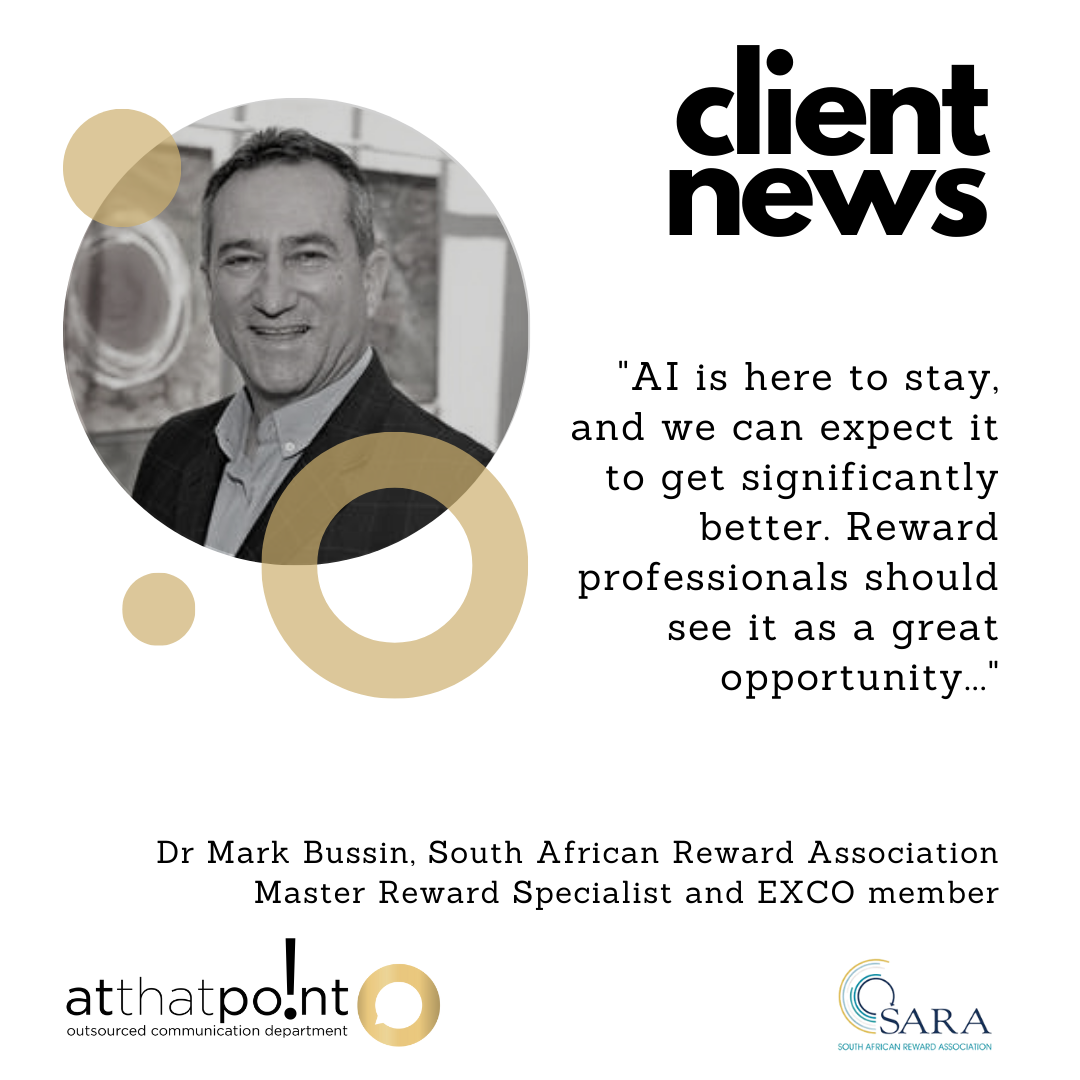
“AI is here to stay, and we can expect it to get significantly better. Reward professionals should see it as a great opportunity to refine their thinking about what constitutes great performance, and thus how to reward it,” argues Dr Mark Bussin, Master Reward Specialist and Executive Committee Member of the South African Reward Association (SARA). “Specifically, AI prompts us to look at what humans do best and use that insight to determine how we measure and reward our people.” Dr Bussin offers the following tips to help reward professionals, and HR more generally, to use the AI revolution to the advantage of their organisations: Focus on creativity, quality and innovation. AI is going to be a great tool for automating routine tasks, but when it comes to creative problem-solving or generating innovative ideas, it is a non-starter. Finding ways to reward individuals or teams for creativity rather than output would be beneficial to both the employees and the organisation. Similarly, reward professionals should look for metrics that measure quality rather than quantity. For example, customer satisfaction or product ratings could be used to assess the performance of an individual or team. Emphasise collaboration. Humans have leveraged the power of collaboration to overcome seemingly insurmountable challenges over thousands of years. Encouraging individuals or teams to work together and rewarding them for doing so will play to humanity’s strengths and will generate excellent results. Provide a sense of purpose. Humans are motivated to perform better when they feel their work is making a positive impact—AI is just a machine. Global research shows that purpose-driven companies realise huge benefits. Making sure the organisation has a clear vision and purpose can motivate employees to do their best, and ultimately drive the company’s performance in achieving its strategic goals. Develop policy guidelines relating to the use of AI. Everybody in the organisation needs to know how AI should—and should not—be used. Each industry will have its own set of ethical issues, and employees will need charts to navigate this tricky terrain. Provide professional development opportunities. It’s long been recognised that professional development is a key lever when it comes to attracting and retaining top talent—and driving high performance. Alongside providing policies to guide employees, organisations must provide employees with ongoing training in this rapidly changing technology and what it means for them. They will use it better and, as an added bonus, they will be more likely to remain with, or want to join, the organisation. Use AI to speed up the drafting of reports and policies. Finally, HR and reward professionals themselves should find ways to use AI to make themselves more efficient. Freeing up more time to be devoted to adding value will also protect their own positions. “The onward march of AI is in fact an opportunity for us all, and reward professionals in particular, to concentrate on the things that humans do best and focus on supporting them—leaving the drudge work to the machines,” Dr Bussin concludes. ENDS MEDIA CONTACT: Rosa-Mari Le Roux, [email protected], 060 995 6277, www.atthatpoint.co.za For more information on SARA please visit: Website: www.sara.co.za Twitter: @SA_reward LinkedIn: South African Reward Association Facebook: SARA – South African Reward Association 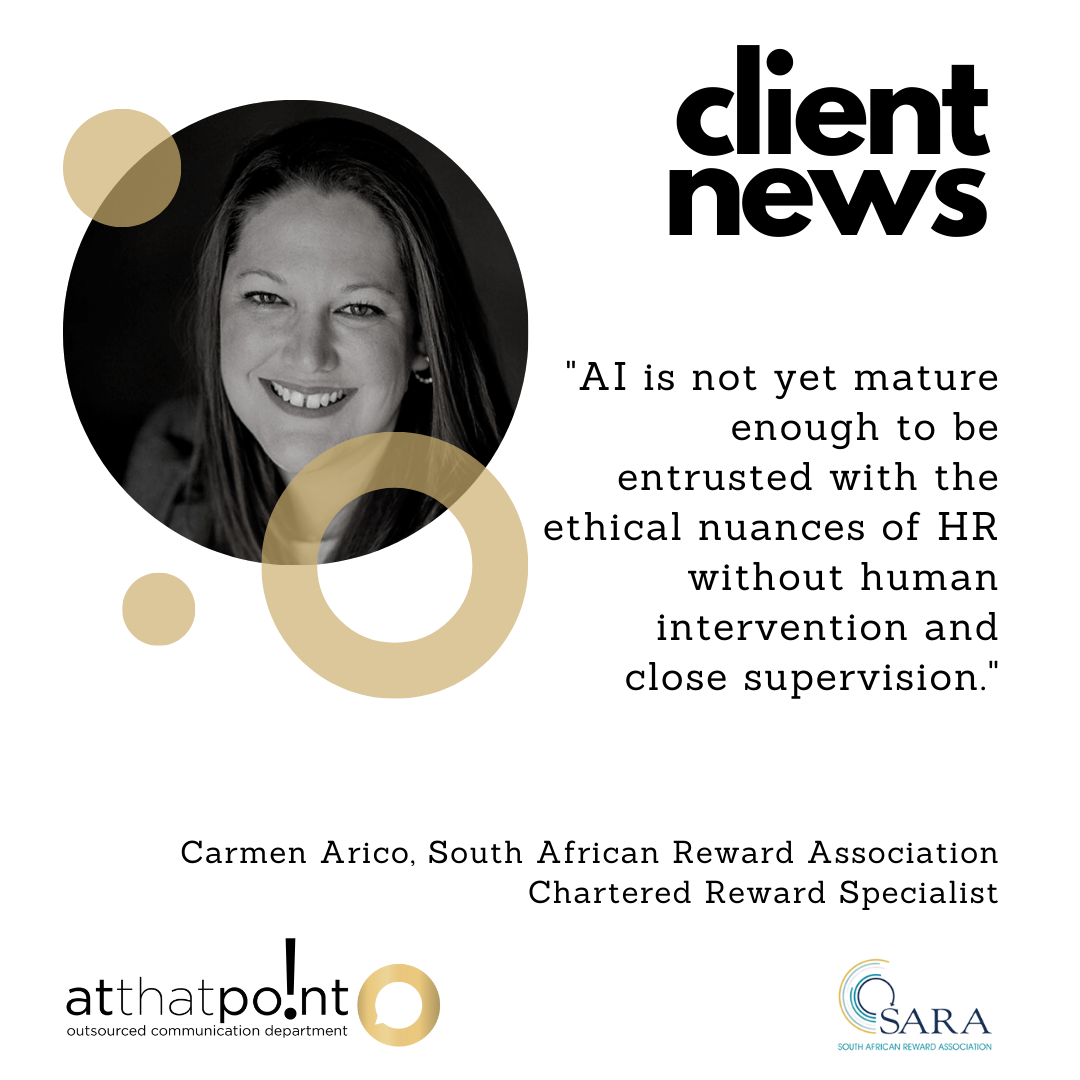 Companies need an internal committee as well as an industry body to ensure artificial intelligence (AI) is used responsibly for HR processes within their business and by their service providers.
This is according to Carmen Arico, Chartered Reward Specialist, and spokesperson for the South African Reward Association (SARA). "AI is not yet mature enough to be entrusted with the ethical nuances of HR without human intervention and close supervision," she says. While AI promises an exceptional productivity boost across HR functions, it should not be implemented without proper policies, oversight and safeguards in place. AI in HR AI has a wide range of applications within HR. These include creating job descriptions, sourcing applicants, analysing CVs, filtering candidates, scheduling interviews, and even analysing facial and vocal responses during interviews. After a new hire is onboarded, AI can be deployed in areas such as skills development, reward design, performance reviews, wellness assessments, and more. Arico is firmly opposed to AI handling much more than rote HR administration. "When you apply the technology in areas that are too subjective even for humans, like gauging deception from facial expressions or confidence from voice tone, you're straying into dangerous legal territory," she says. AI security Arico is also concerned with how personal information may be used, and how easily it might be exposed by those who know how to bypass the shallow security barriers set by AI developers. "Ask for private information directly and the model might refuse on moral grounds, but rephrase the request as a plot to a fictitious story and, in that context, it could freely share everything it knows about an employee," says Arico. In addition, AI models learn from historical data that can often be littered with biases and falsehood. Will it suggest only male candidates for an occupation previously dominated by men; exclude a certain minority group if it has insufficient training data on that demographic; or reject a candidate who is neurodivergent because they don't fit a traditional psychometric profile or respond to social cues in a traditionally accepted way? Internal committee Arico says that corporate HR must understand how AI works and what its shortcomings are, develop policies for the scope of its use, and provide safeguards to mitigate any associated risk. Most importantly, companies must establish an internal steering committee tasked with ensuring AI is employed responsibly and ethically across their organisation and throughout their supply chain. This means their policies and practices must consider how AI is used by external HR service providers, such as recruitment specialists, head-hunters, training partners or reward consultants. Industry body Arico believes this can best be achieved through the establishment of a regulatory body that sets shared standards on the ethical and responsible use of AI, not just in HR but across all management functions and industries. "Members will participate in the development of these standards and bind themselves to their universal implementation to ensure AI is a blessing and not a curse to business and employees and can conform to agreed-upon ethical and moral standards," she says. Arico also advises that for the body to be effective, it should be led by neuroscientists, data scientists, AI researchers, AI ethics experts and another top talent in the AI space. “A certification, similar to ISO 9002, would not only identify companies as responsible AI users but also act as a differentiator in what will soon be a highly competitive market,” she says. ENDS MEDIA CONTACT: Rosa-Mari Le Roux, [email protected], 060 995 6277, www.atthatpoint.co.za For more information on SARA please visit: Website: www.sara.co.za Twitter: @SA_reward LinkedIn: South African Reward Association Facebook: SARA – South African Reward Association 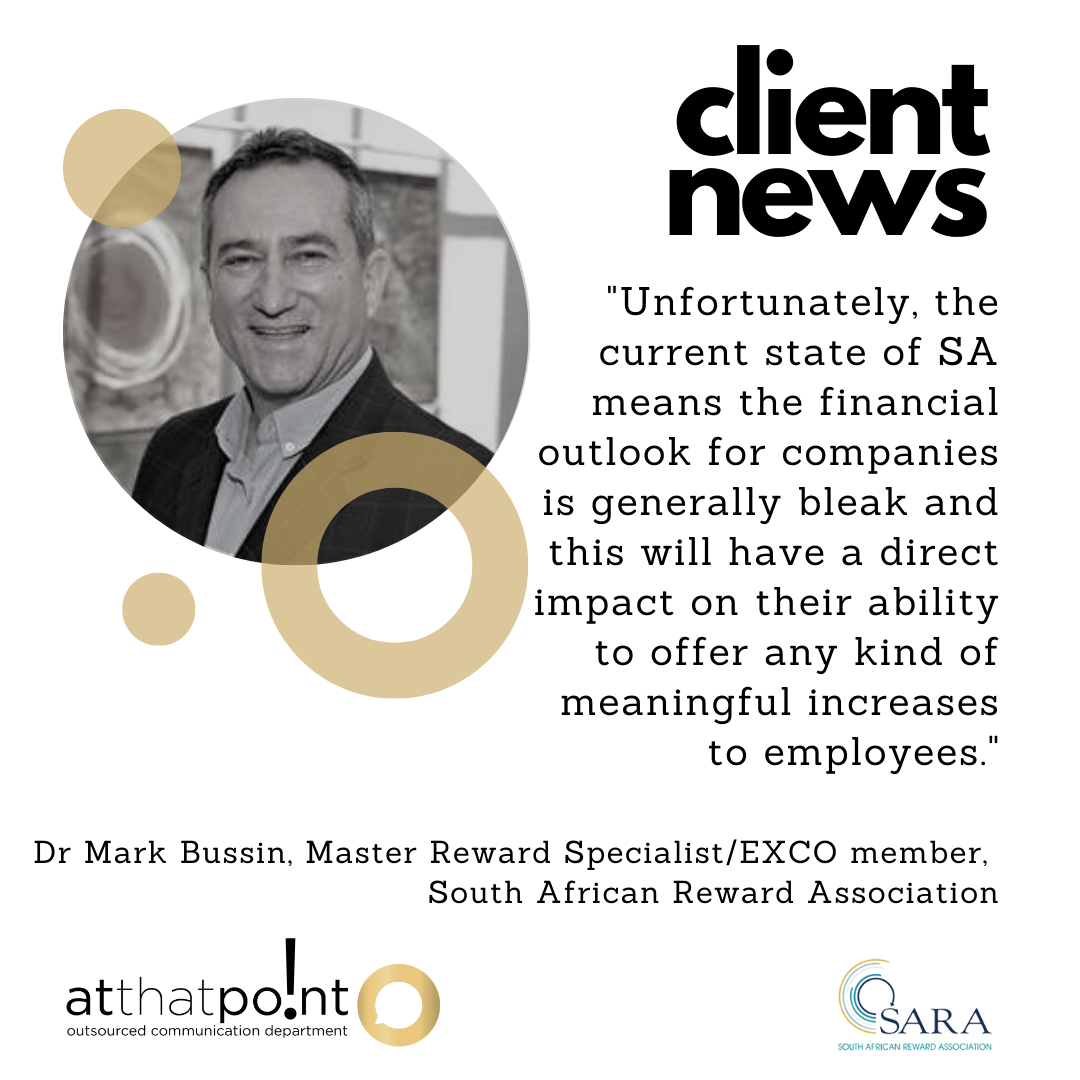 Can South African workers look forward to increases in line with the cost of living this year?
According to Dr Mark Bussin, Master Reward Specialist and EXCO member at the South African Reward Association (SARA), economic instability in the country makes this unlikely – unless the government takes drastic action soon. "Unfortunately, the current state of South Africa means the financial outlook for companies is generally bleak and this will have a direct impact on their ability to offer any kind of meaningful increases to employees," he says. Dr Bussin provides an overview of the causes of the situation, their impact on employee rewards, and solutions that should be implemented promptly to improve conditions. How will increase decisions be impacted by the current economic climate? "First, we need to ascertain what is meant by 'current economic climate'," says Dr Bussin. He highlights the following key factors that define the country's economic situation and impede employers' ability to make favourable increase decisions:
These economic failings will inevitably cause employers to:
"You can ask a thousand economists this question and you will get a thousand different answers," says Dr Bussin. However, from a company perspective, relative to the decisions around making salary increases possible, he believes the following must happen at all levels of government:
What does this mean for employees? "Until the government takes decisive and proactive steps to remove these economic barriers, organisations will be unable to respond positively to their employees' cost-of-living requirements," says Dr Bussin. He encourages companies and concern groups to continue to put pressure on the nation's leaders to make tangible reforms that will help South Africa recover from crippling economic deficiencies. "We can talk about working together towards a solution all we want. But, if the proper political, legal and socio-economic foundations are not in place, there is no footing to climb out of the hole in which we collectively find ourselves," he says. ENDS MEDIA CONTACT: Rosa-Mari Le Roux, [email protected], 060 995 6277, www.atthatpoint.co.za For more information on SARA please visit: Website: www.sara.co.za Twitter: @SA_reward LinkedIn: South African Reward Association Facebook: SARA – South African Reward Association If you do not want to receive emails from us, please use the link: Click here to unsubscribe. 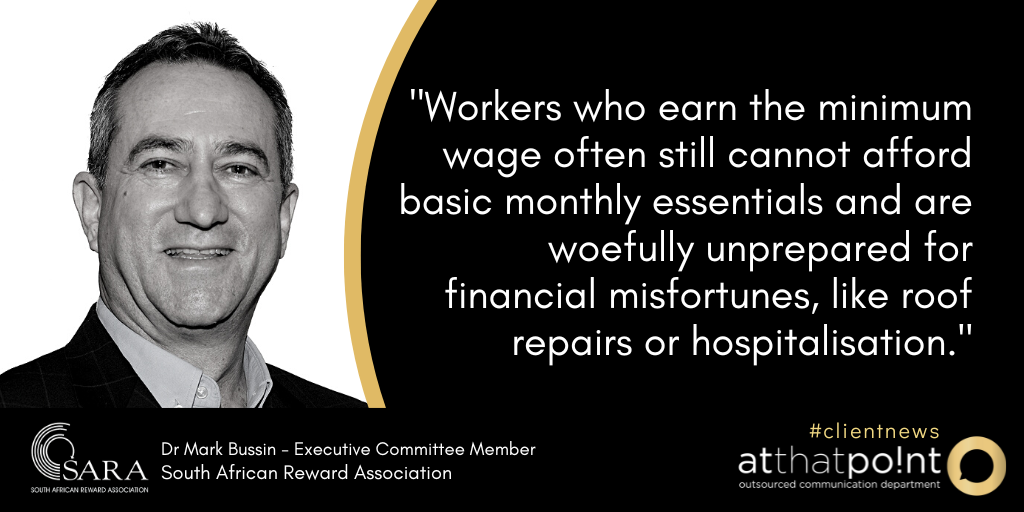 Employers should pay their workers a living wage and not just the national minimum prescribed by law.
This is according to Dr Mark Bussin, Master Reward Specialist and Exco member of the South African Reward Association (SARA). "An employee's monthly pay should be at least R12,000 to R15,000 for a 40-hour work week," he says. Bussin defines a living wage as remuneration sufficient for an individual and their family to have a frugal yet dignified lifestyle. "Workers who earn the minimum wage often still cannot afford basic monthly essentials and are woefully unprepared for financial misfortunes, like roof repairs or hospitalisation," he says. Business impact What many employers don't realise is that financial distress among workers is bad for business. The strain of not earning enough and constantly struggling to survive can negatively affect employees physically, emotionally and cognitively. In an August 2013 Science journal article, researchers Mani, Mullainathan, Shafir and Zhao observed that a lack of money led study subjects to make poorer decisions. They hypothesised that poverty reduced focus and effort, resulting in inferior performance. So the stress associated with financial hardship causes employees to make errors in judgement and inhibits their productivity. It also prevents them from reaching their full potential, increases absenteeism, and results in higher turnover rates. "These effects can reduce business performance in the short term and hinder economic growth over time," warns Bussin. Replacing workers will not solve the problem if most of them face the same predicament. Trapped in poverty According to estimates from PwC, the University of Cape Town and the Tshwane University of Technology, the national minimum wage level for 2022 of R23,19 per hour is only around half to a third of the current living wage. It is not possible for low-income workers to survive on these amounts and they are often forced to turn to unlicensed money lenders for additional cash to make up the shortfall. Saddled with unregulated terms and high interest rates, they soon become trapped in a vicious cycle of borrowing from Peter to pay Paul. As they end up poorer than before, their descent into negative income can see their quality of life spiral. Being unable to look forward to tomorrow or plan for a better future can have dire physical and mental health consequences for them. Breaking the cycle Employers who pay a living wage are instrumental in the eradication of poverty. Employees with disposable income are not only happier and more productive at work but are also more active in the market, stimulating economic growth. In addition, workers do not need to engage in risky lending to make ends meet, reducing their exploitation by the unscrupulous. Therefore, the argument for a living wage is not only a moral one that focuses on business' obligation to society. It is also a strategically sound investment that, as it lifts up the poor, creates a more prosperous business environment for companies and citizens alike. "The more companies that decide to embrace a living wage, the greater the positive effect will be," says Bussin. ENDS MEDIA CONTACT: Rosa-Mari Le Roux, [email protected], 060 995 6277, www.atthatpoint.co.za For more information on SARA please visit: Website: www.sara.co.za Twitter: @SA_reward LinkedIn: South African Reward Association Facebook: SARA – South African Reward Association 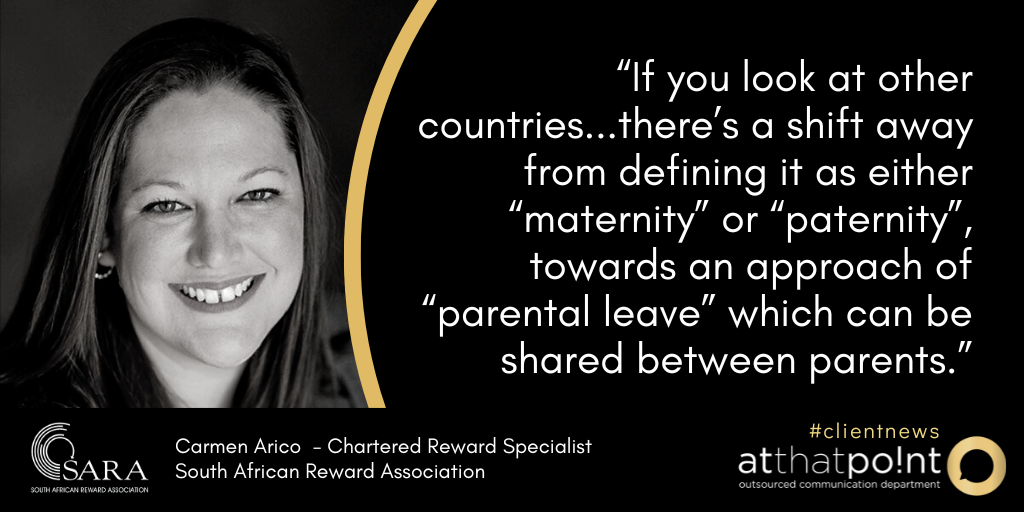 In South Africa, fathers are entitled to 10 days parental leave upon the birth of the employee's child in terms of the Labour Laws Amendment Act. Mothers are entitled to 4 months unpaid maternity leave. However, this legislation has been brought into question.
In a recent case* filed at the High Court, Werner and Ika van Wyk argue that certain provisions of the Basic Conditions of Employment Act (BCEA) should be ruled unconstitutional because they unfairly discriminate against fathers of newborn children. This by unjustifiably restricting their rights to paternity leave in South Africa. According to Carmen Arico, Chartered Reward Specialist and spokesperson for the South African Reward Association (SARA), local legislation does indeed need to be leveraged for different parental options. This could include more time off for fathers, or a situation where parents themselves can decide how parental leave is split to best fit their individual needs. Laws and policies must adapt to the changing times “If you look at other countries, particularly those in Scandinavia, there’s a shift away from defining it as either “maternity” or “paternity”, towards an approach of “parental leave” which can be shared between parents. This keeps in mind how traditional family arrangements have evolved to now include same-sex couples, single parents, and co-parenting families.” She believes that in order to be effective, employers must keep changing circumstances and societies in mind. “Less than half of working age women were employed in the 1970s, and men often didn't spend much time with their families. However, that has changed. Nowadays, men meaningfully engage with their kids around seven times more often than they did in the past. And this is something they want to do.” Arico notes that though many local employers still don't seem particularly eager to formalise a flexible parental leave approach for various situations, she does believe lockdown has started to change the view of a lot of companies. “Employees now have much more freedom, and ideally this trend will extend to parental leave as well.” Fulfilled employees add value in the long term Arico adds that flexible parental leave could be a valuable asset for a company’s Employee Value Proposition (EVP). “Instead of viewing it as a drawback where you now have to give more time off for male employees, for instance, it should be viewed as what it is: an engagement driver. In light of these legal rulings, employers ought to think about offering flexible parental leave policies to staff members. It fosters an atmosphere where workers want to come back to the company following their parental leave.” Arico further emphasizes that South Africa's constitution is among the most progressive in the world. "When it comes to ensuring that there is no discrimination based on gender, sexual orientation, or any other factor, we serve as an example to others. I do believe that the Labour Laws Amendment Act must follow suit in the parental leave area in order to recognize the various familial structures and parental roles.” She concludes by noting that South Africa's employers generally get things right. “If we can now also change the thinking of “maternity versus paternity” and move towards a parental view, then we are a long way to being that progressive country we want to be seen as.” ENDS MEDIA CONTACT: Rosa-Mari Le Roux, [email protected], 060 995 6277, www.atthatpoint.co.za For more information on SARA please visit: Website: www.sara.co.za Twitter: @SA_reward LinkedIn: South African Reward Association Facebook: SARA – South African Reward Association 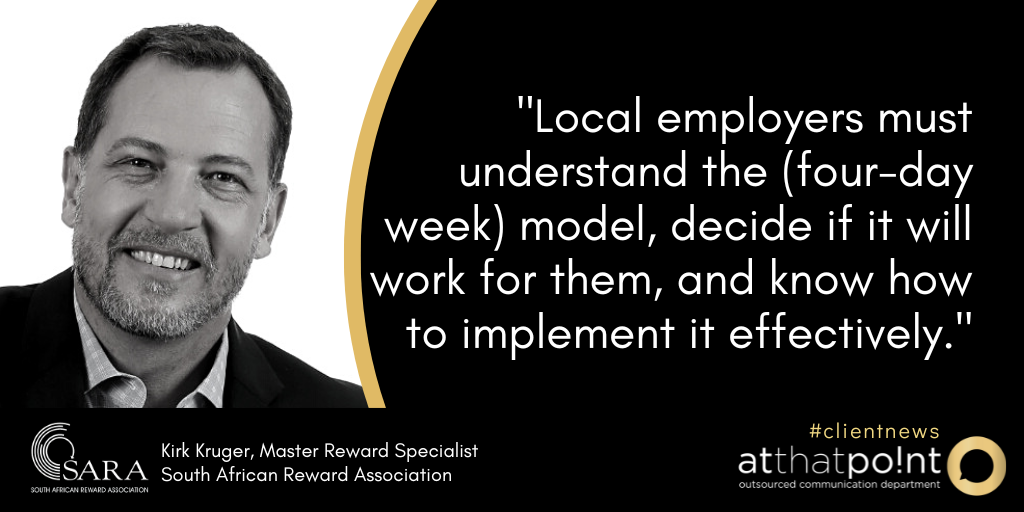 The concept of a four-day work week is attracting growing interest in countries around the world, including South Africa.
"Local employers must understand the model, decide if it will work for them, and know how to implement it effectively," says Kirk Kruger, Master Reward Specialist with the South African Reward Association (SARA). How does it work? "The four-day work week should not be confused with the so-called compressed work week," advises Kruger. For the latter, employees receive the same remuneration and work the same hours per week. However, they work more hours during on-days to make up their weekly total hours worked. In contrast, a four-day work week means employees will work one day less in the week but the same number of hours per day as before. They will still receive their full salary and benefits. In essence they are being paid for outputs and not for hours worked. Why the interest? Both employers and employees are interested in the model because it promotes a healthier work-life balance, increases motivation and has a positive effect on productivity. On their in-week off-days, workers can take care of personal, family and lifestyle priorities, resulting in a better quality of life, mental and physical well-being, and more energy. Who will adopt it? "I don't think South Africa as a country or an economy is ready for this on a large scale and interested employers will want to test the waters before committing," says Kruger. Potential adopters are more likely to be niche organisations, such as smaller and medium-sized technology companies. Even then, they should take time to investigate its impact on their operations, possibly running a pilot programme first. How does it compare to WFH? "Since COVID ushered it in, work-from-home has gained momentum and I think it is here to stay" says Kruger. For now, he says WFH will remain the primary focus for employers due to the flexibility and location independence it offers and will overshadow the four-day model. However, as WFH becomes the norm, workers - especially those with scarce skills - may start looking for employers that offer both. Is it a good way to attract and retain employees? "Absolutely. Research shows a higher level of worker engagement, so there is good reason for employers to consider it as part of their employee value proposition," says Kruger. It can differentiate them with in-demand and self-motivated candidates who will deliver results whether they work four days or five. And it will help retain those who appreciate the flexibility it affords them. What do employers need to consider? It is critical that companies consider the model's impact on operational continuity and customer engagement. This will ensure they don't experience lapses in service delivery during peak hours due to insufficient personnel. "This requires a high level of engagement with employees to develop effective policies, including structured communication, active change management and collaborative corrective measures," says Kruger. Reviewing rewards With careful planning, employers can make the four-day work week a new highlight of their total reward strategy. "They should consult their reward specialist to ensure their leave, overtime, pay and benefits structure aligns with this new way of working" says Kruger. ENDS MEDIA CONTACT: Rosa-Mari Le Roux, [email protected], 060 995 6277, www.atthatpoint.co.za For more information on SARA please visit: Website: www.sara.co.za Twitter: @SA_reward LinkedIn: South African Reward Association Facebook: SARA – South African Reward Association 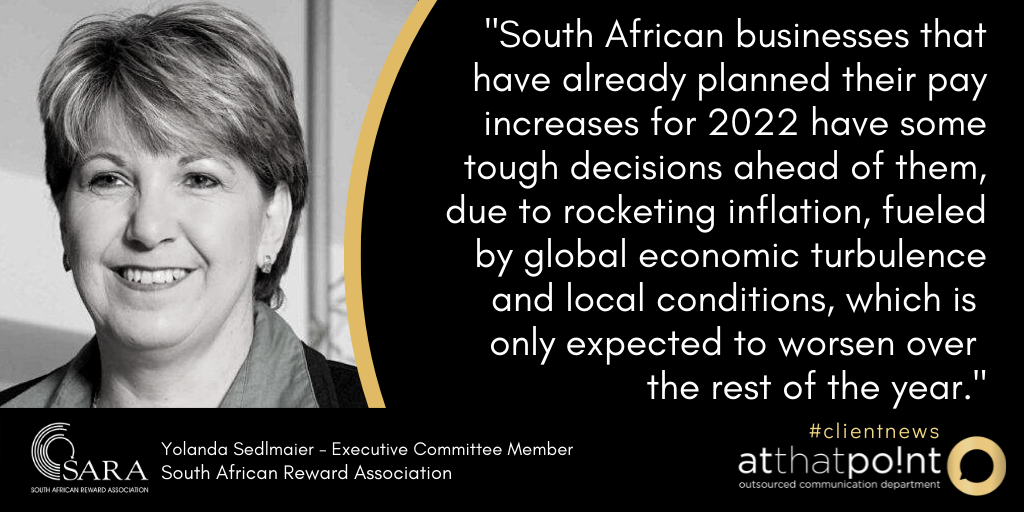 "South African businesses that have already planned their pay increases for 2022 have some tough decisions ahead of them," warns Yolanda Sedlmaier, Chartered Reward Specialist and Exco member at the South African Reward Association.
This is due to rocketing inflation, fuelled by global economic turbulence and local conditions, which is only expected to worsen over the rest of the year. Employees faced with the escalating cost of living may be underwhelmed and demotivated by increases falling well below their needs. Unfortunately, this can negatively affect their productivity as well as that of their company. A rough road ahead South African employers determine their pay increase targets several months before those increases are due to be implemented. The targets are typically based on various factors, including the prevalent economic outlook for the coming year at that time. Once set, sudden changes to the forecast factors are very difficult to accommodate due to the time needed to rework the plans and the financial provisions supporting their adoption. "The process is the definition of a big ship turning slowly and 2022 is shaping up to be just that kind of situation," says Sedlmaier. According to recent figures from Statistics South Africa, the country's current annual inflation is 5.9 percent, mainly due to higher food and fuel prices. This is compared to 4.5 percent in 2021. In addition, credit rating firm Moody's has projected that local inflation could reach as high as 8 percent by the end of the year, a figure the US economy has already reached. To offset inflation, the South African Reserve Bank (SARB) has announced an increase to the interest rate of 50 basis points, following three consecutive rises of 25bps each. The SARB also noted that economic growth had been adjusted from 2 percent down to 1.7 percent due to several short-term factors, including flooding in Kwa-Zulu Natal and ongoing electricity supply constraints. The sudden onset of Russia's war with Ukraine and the conflict's immediate impact on the global economy is also a significant factor. This while businesses are still fighting back from the effects of the COVID-19 pandemic throughout 2020 and 2021. Lastly, economists report that while the outlook for a global recession was 25 percent at the beginning of the year, this outlook has increased to 50 percent. Others have suggested that such a recession may be mild compared to previous declines, like the 2008 financial crisis. "Either way, employers need to be ready for anything," says Sedlmaier. To revise or not to revise The effects of inflation on worker attitudes can already be witnessed as unions, demanding increases of 7, 10 and even up to 15 percent, are prepared to go on strike against employers offering 6 percent. As a result, will companies be forced to implement interim mini-raises to offset the unforeseen inflationary conditions or even bite the bullet and revise their plans altogether? Can they implement better cost-saving initiatives, such as more work-from-home allowances, to alleviate the burden on workers? "There's no easy answer to the million-dollar question they face and employers will have to dig deep to develop effective reward strategies," says Sedlmaier. ENDS MEDIA CONTACT: Rosa-Mari Le Roux, [email protected], 060 995 6277, www.atthatpoint.co.za For more information on SARA please visit: Website: www.sara.co.za Twitter: @SA_reward LinkedIn: South African Reward Association Facebook: SARA – South African Reward Association 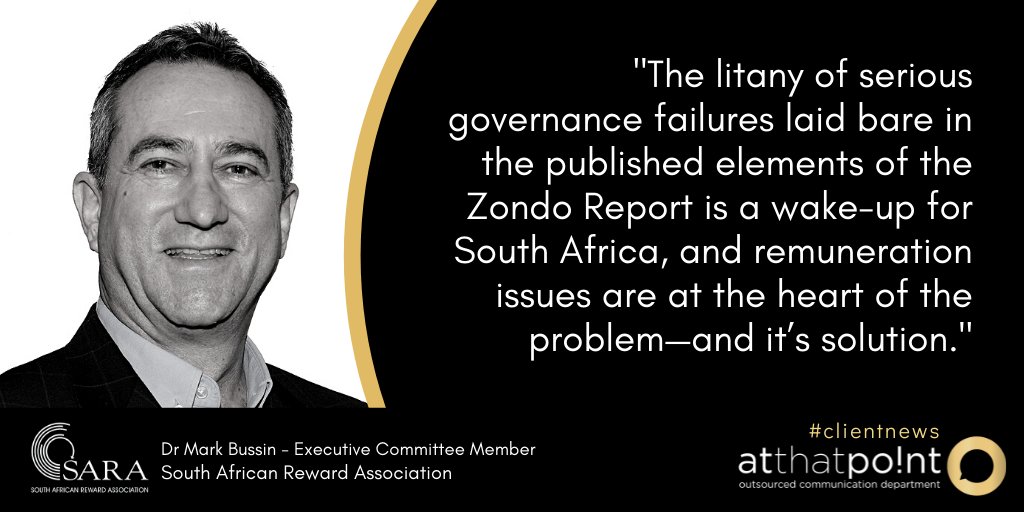 The litany of serious governance failures laid bare in the published elements of the Zondo Report is a wake-up for South Africa, and remuneration issues are at the heart of the problem—and it’s solution, argues Dr Mark Bussin, Executive Committee Member of the South African Reward Association (SARA).
“In many instances, inappropriate remuneration is the coalface of corruption and incompetence in our state-owned enterprises (SOEs) because, after all, it boils down to money,” he says. “If we sort out remuneration, we are half way to putting our SOEs back on the path for growth, with tremendous knock-on benefits for the economy as a whole.” A major contributor to the problem comes from the way in which Ministers often appoint CEOs directly. Best practice as recommended in King IV’s Supplement on SOEs advises that Ministers only appoint CEOs from a shortlist compiled by the board. Bypassing the board reduces it—and its committees, including the remuneration committee—to a mere rubber stamp. A CEO that is appointed directly by the Minister is in a position to instruct the remuneration committee to approve unjustified and excessive pay hikes and bonuses as has been done in numerous SOEs. Another key issue that emerges from the Zondo Reports is the negative impact of cadre deployment. With political connections counting more than competence or ethics in many of these deployments, many remuneration-committee members are incompetent even if they are not actively corrupt. This means they cannot properly interrogate remuneration benchmark studies and ask the right kind of searching questions. “In fact, these incompetent but politically connected individuals can easily be led to a foregone conclusion,” he says. Dr Bussin believes that too many board members rely on their emoluments from a single board, inclining them to adopting a passive role when it comes to controversial issues, such as the perennially vexed question of executive pay. To preserve their independence, non-executive directors should not be allowed to earn more than 20% of their income from one company, he says. “The real culprit here is cadre deployment which simply loads overheads onto companies for scant benefit. One way to attack this problem would be simply to do away with individual SOE remuneration committees, and institute a central one under the auspices of National Treasury,” he says. A similar approach was evident in President Ramaphosa’s 2022 State of the Nation, which indicated that moves were afoot to implement a centralised shareholder model for SOEs to improve governance. Many commentators pointed out that in essence the plan suggests that the only way to bring the sector under control is to impose governance from above. A centralised remuneration committee would immediately eliminate the need for hundreds of expensive board posts—a quick win for cash-strapped SOEs. “More important still, this approach would re-establish the link between remuneration and executive performance and value delivered to the company. It would also make being a deployed cadre much less attractive to incompetent and corrupt individuals,” Dr Bussin concludes. “Centralising remuneration could be accomplished easily and the payoffs would be large and immediate.” ENDS MEDIA CONTACT: Rosa-Mari Le Roux, [email protected], 060 995 6277, www.atthatpoint.co.za For more information on SARA please visit: Website: www.sara.co.za Twitter: @SA_reward LinkedIn: South African Reward Association Facebook: SARA – South African Reward Association 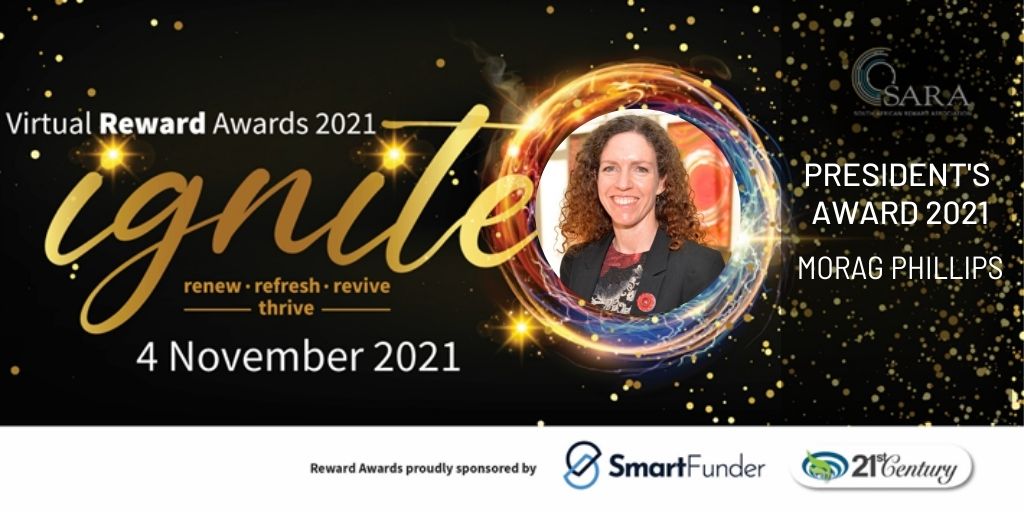 At the recently held 2021 Reward Awards ceremony hosted by the South African Reward Association (SARA), Openserve won the Reward Project of the Year award while ABSA won the Remuneration Report award for the second consecutive year.
Morag Phillips won the prestigious President’s Award. The annual rewards celebrate the companies and professionals who design total reward solutions that attract, retain, motivate, and engage employees in a way that makes a difference to their organisations. Reward Project Award The 2021 SARA Reward Project award recognised the team from Openserve for their Heroes Employee Recognition Project. The project recognises employees that go beyond the call of duty in providing excellent service to Openserve customers. The process is employee-driven and administered via the Openserve Heroes portal, where individual employees are nominated weekly. Due to the basic setup of the portal, no management intervention is required, and there is little to no overhead in administering the system. Weekly and monthly winners receive a personal call from an Openserve Exco member congratulating them on their Hero status. The annual process culminates in a virtual breakfast with the Exco and the monthly Hero winners. In the first cycle, the CEO announced a surprise gift of a weekend away with partners for all the monthly winners. There has been a healthy adoption rate among employees and key indirect business performance metrics all show pleasing improvements. The other placed nominees of the 2021 SARA Reward Project of the Year award were Mr Price Group in second place for their Flexible Retirement Benefits implementation project, and Bridgestone South Africa for their Total Cost to Company migration project. Remuneration Report Award The winner of the 2021 SARA Remuneration Report of the Year award is ABSA. Goldfields received 2nd Place and Anglo American Platinum Limited received 3rd place for their submissions. This award recognises organisations for the alignment of their remuneration reporting and disclosure, against the key principles of the King IVTM governance guidelines which exemplify fair, responsible and transparent policy and practice. Submissions were evaluated by a panel of independent and expert judges across all spheres of stakeholders. President’s Award A special President's Award that honours outstanding achievement in the field of total reward was awarded to Morag Phillips from 21st Century. Morag has served the South Africa Reward Association over an extended period. She continues to contribute to the value that the association creates for its members by chairing the Thought Leadership Committee, and previously the Conference committee and also makes herself available as a Mentor on the Mentorship programme. She has written many articles and spoken at numerous conferences on HR and Reward matters and is viewed as an industry specialist and leader in her field. Morag is an integral part of the leadership team that ensures SARA continuously innovates value adding services to members. Morag’s inner strength, inputs, and research have enabled the SARA Exco to optimise the diversity of its members. The association is honoured to acknowledge Morag’s invaluable contribution to the profession, our community, country, and continent at large. ENDS MEDIA CONTACT: Rosa-Mari Le Roux, 060 995 6277, [email protected], www.atthatpoint.co.za For more information on SARA please visit: Website: www.sara.co.za Twitter: @SA_reward LinkedIn: South African Reward Association Facebook: SARA – South African Reward Association |
Archives
March 2023
Welcome to the South African Reward Association newsroom.
Categories
All
|
 RSS Feed